
Categories
Market UpdatesPublished July 16, 2026
Real Estate Investing in Whittier, CA: 2026 Market Outlook and ROI

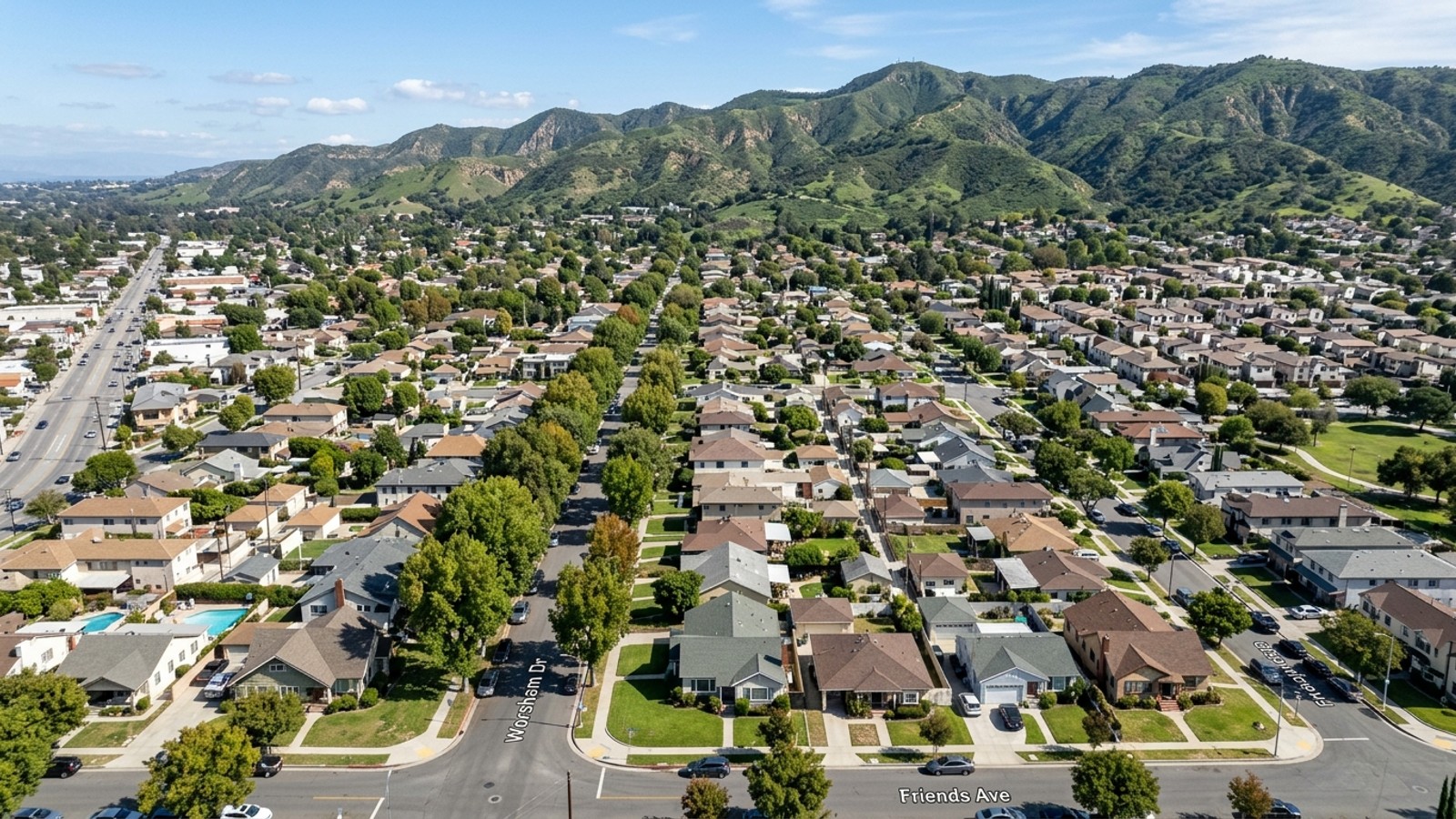
Whittier, CA sits in Los Angeles County, offering a distinct real estate market compared to the urban core of Los Angeles. Investors looking into the Whittier, CA housing market find a mix of older, character-rich homes, established commercial corridors, and a steady tenant base. The city supports diverse investment approaches, from single-family rentals to small multifamily properties.
The current market conditions require a close look at property values and rental demand. With median home prices hovering around $887,000 in the summer of 2026, finding cash-flowing properties involves strict criteria and local neighborhood knowledge. Buyers evaluate everything from historic district regulations to local short-term rental laws before making an offer.
Why Investors Look at the Whittier Real Estate Market
The median sale price for homes in Whittier, CA is roughly $887,000, which reflects a modest year-over-year increase. Homes spend an average of 37 days on the market before selling. This steady pace indicates a stable environment for buyers and sellers, without the extreme volatility seen in other parts of the state.
Inventory remains relatively tight, with about 83 available homes and roughly 2.3 months of supply. This limited stock means buyers and sellers operate in a market where half of all properties sell above their list price. Investors must come prepared with strong financing or cash offers to compete with traditional homebuyers.
Whittier Market Snapshot: Prices and Appreciation
Over the past year, home values in Whittier have appreciated by about 1.3%. This steady, slow growth appeals to investors focused on long-term equity rather than rapid, speculative spikes. Property owners benefit from predictable appreciation that builds wealth over a decade or more.
The average sale-to-list ratio is just over 99%. Sellers generally receive their asking price, so investors should not expect deep discounts on move-in-ready homes. Finding a property below market value requires targeting homes that need structural repairs or cosmetic overhauls.
Analyzing Buyer and Seller Dynamics in Whittier
With 2.3 months of supply, Whittier leans toward a seller's market. A balanced market typically requires closer to six months of inventory to give buyers equal negotiating power. Sellers dictate the terms on turnkey properties, often reviewing multiple offers within the first few weeks of listing.
Buyers looking for wholesale real estate in Whittier or distressed properties often have to look off-market. On-market listings receive consistent attention from primary homebuyers, increasing competition for investors. Networking with local wholesalers and probate attorneys provides a pathway to inventory before it hits the multiple listing service.
Data Driving Whittier Property Values
Whittier maintains a steady population base within Los Angeles County, supported by local institutions like Whittier College and PIH Health Whittier Hospital. These employers create consistent demand for housing from faculty, medical professionals, and students. A stable job market directly supports local rent prices and property values.
Property taxes in California follow Proposition 13, capping the general tax rate at 1% of the assessed value at the time of purchase, plus local voter-approved bonds. This predictable tax structure helps investors calculate long-term holding costs. Buyers know their property tax burden will not skyrocket even if the home's market value doubles over the next twenty years.
Home Prices and Rental Rates Across the City
While the citywide median purchase price sits near $887,000, costs vary between zip codes. Neighborhoods in the hills generally command higher prices than those closer to the commercial centers. Investors balance these higher acquisition costs against the potential for premium rental rates.
Rents in Los Angeles County have stabilized, and Whittier landlords typically see rental rates that align with the broader metro averages. Investors must compare the projected monthly rent against the high initial purchase price to determine cash flow. In many cases, buyers rely on a sizable down payment to ensure the monthly rent covers the mortgage and operating expenses.
Neighborhoods to Watch for Rental ROI
Uptown Whittier features walkable retail and dining, drawing renters who want proximity to amenities. Properties here often consist of older single-family homes and small multifamily buildings. The density and layout of Uptown make it a frequent target for investors seeking multiplexes.
East Whittier and Murphy Ranch offer more suburban layouts with larger lots. Investors targeting long-term tenants often look at these areas for their established housing stock and consistent occupancy rates. The turnover rate in these neighborhoods tends to be lower, reducing the vacancy costs associated with finding new renters.
Investment Strategies for the Local Market
Buy-and-hold strategies dominate the Whittier market due to the high barrier to entry and steady tenant demand. Investors purchase properties to generate monthly rental income while waiting for long-term appreciation. This approach requires patience and a focus on property management to maximize returns over a ten- or twenty-year hold period.
House flipping is another approach, though the 99% sale-to-list ratio means finding properties under market value requires aggressive sourcing. Flippers look for outdated homes that need significant cosmetic or structural updates. The profit margin relies entirely on the investor's ability to manage construction costs and sell quickly once renovations are complete.
Buy-and-Hold Rentals and House Flipping
Investors holding rental property in California must comply with state and local tenant laws. Whittier landlords should factor in maintenance costs for older properties, especially those built before 1980. Updating plumbing, electrical panels, and HVAC systems often eats into the first few years of rental income.
Flippers often rely on the 70% rule, which states an investor should pay no more than 70% of the after-repair value (ARV) minus the cost of repairs. In a market where homes average $887,000, sticking to this margin often means targeting severe fixer-uppers. Buyers who can execute their own contracting work often have an advantage when applying this formula locally.
Evaluating Deals with Standard Real Estate Math
The 1% rule suggests a property should rent for 1% of its purchase price each month. In Whittier, finding an $887,000 home that rents for $8,870 a month is rare, so investors often adjust their expectations for the Southern California market. Many local buyers accept a lower monthly percentage in exchange for long-term equity growth.
Other investors use the 3-3-3 rule, which allocates three months of mortgage payments for vacancy, three for maintenance, and three for capital expenditures. The 7% rule assumes an average annual return of 7% on real estate investments over the long haul, combining cash flow and appreciation. Both rules help buyers build a buffer into their financial models before purchasing.
Short-Term and Month-to-Month Rentals in Whittier
Short-term rentals (STRs) in Whittier operate under specific municipal guidelines. The city bans short-term rentals in Very High Fire Hazard Severity Zones, which eliminates many hillside properties from this strategy. Buyers must check the exact zoning and hazard maps before purchasing a house with the intent to list it on Airbnb or VRBO.
For properties outside the restricted zones, operators must secure the proper permits and collect a 10% Transient Occupancy Tax (TOT). Investors should incorporate this tax and the cost of annual permit renewals into their operating budget. The city actively enforces these rules, and unpermitted operators face daily fines.
Local Rules for Short-Term Rentals
The 75/55 rule is a common benchmark for STR profitability, aiming for 75% occupancy at a rate 55% higher than long-term rent. Achieving this in Whittier requires a property that appeals to visiting professionals or relatives of local residents. Proximity to major event venues or transit corridors helps maintain high occupancy rates.
Operating an STR in California also involves navigating state-level regulations. Investors must maintain compliance with local noise and parking ordinances to keep their permits active. A single complaint from a neighbor can trigger a code enforcement review, making property management a daily responsibility.
Furnished Housing Near Whittier Institutions
Month-to-month furnished rentals offer a middle ground between daily STRs and annual leases. Traveling nurses working at PIH Health Whittier Hospital often seek 30- to 90-day leases. These tenants need move-in-ready homes and are willing to pay a premium for the convenience of flexible lease terms.
Visiting faculty or students at Whittier College and Rio Hondo College also drive demand for medium-term housing. These tenants typically look for turnkey properties with utilities and internet included in the rent. Furnishing a property requires an upfront capital investment, but the higher monthly income often offsets the initial expense within the first year.
Evaluating Whittier Investment Properties and Locations
Approximately 87% of properties in Whittier carry some level of wildfire risk, and 4% face severe flood risk. Investors must factor the cost of specialized insurance policies into their operating expenses. Standard hazard insurance rarely covers these specific events, and the California insurance market requires careful navigation to find adequate coverage.
The city also contains four historic districts filled with Craftsman and Spanish Revival architecture. Properties in these districts are subject to specific preservation guidelines that govern exterior modifications and repairs. Investors must understand these restrictions before purchasing a historic home, as they directly impact renovation budgets and timelines.
Assessing Property Risks and Historic Districts
Buying an investment property in a historic district means any exterior renovation must go through a local approval process. This can delay flipping timelines and increase the cost of materials like windows and roofing. Investors cannot simply install modern vinyl windows on a 1920s Craftsman without violating the district codes.
Deferred maintenance devalues a house the most in this market. Water damage, outdated electrical systems, and foundation issues quickly drive away retail buyers, creating opportunities for investors who can manage complex renovations. Identifying a property with cosmetic flaws rather than structural defects is the fastest path to building equity.
Finding Commercial Real Estate and Wholesale Deals
Commercial real estate in Whittier includes retail spaces along Whittier Boulevard and mixed-use buildings in Uptown. Investors looking beyond residential housing often target these areas for triple-net lease opportunities. Commercial leases typically run longer than residential agreements, providing a stable income stream for five to ten years at a time.
Sourcing wholesale real estate in Whittier requires networking with local wholesalers who focus on distressed debt or probate sales. These off-market transactions allow investors to bypass the competitive MLS inventory. Wholesalers assign their purchase contracts to investors for a fee, providing a steady pipeline of off-market housing.
Next Steps for Buying Property in Whittier
Securing financing for an $887,000 median-priced property usually requires a 20% to 25% down payment for non-owner-occupied loans. Lenders will evaluate the projected rental income and the investor's debt-to-income ratio. Buyers should have their pre-approval letters and proof of funds ready before touring properties.
Connecting with other professionals in Los Angeles County helps new buyers understand local zoning changes and contractor pricing. Real estate investment associations provide a venue to share resources and find off-market deals. Surrounding yourself with experienced local operators accelerates the learning curve.
Finding Local Real Estate Investment Groups
Several real estate investing classes and groups operate in and around Whittier. These organizations host monthly meetings where members discuss local market data and legislative updates. Attending these events allows new buyers to learn from investors who are actively buying and selling in the current market.
Joining a Whittier real estate investment group connects buyers with property managers, hard money lenders, and escrow officers. Building this team is a necessary step before placing an offer on a property. A reliable contractor and an efficient escrow officer can make the difference between a profitable flip and a stalled project.
Working with a Whittier Investment Broker
Real estate investment companies in Whittier track daily inventory changes and rental rates. A broker who understands the difference between a historic district property and a standard single-family home can prevent costly mistakes. They analyze cap rates and cash-on-cash returns rather than just surface-level aesthetics.
Buyers should look for agents who have personal experience managing or flipping homes in Los Angeles County. They can provide accurate repair estimates and connect investors with reliable local contractors. An agent who speaks the language of investment real estate will streamline the acquisition process.
Frequently Asked Questions
Which Whittier neighborhoods offer the best ROI for rental property investors?
It depends on your strategy. Uptown Whittier yields strong returns for smaller multifamily units due to walkability, while Friendly Hills attracts higher-income, long-term single-family renters. Rents in Friendly Hills can easily exceed $4,500 a month for a four-bedroom home.
Does Whittier have its own rent control ordinance for multifamily properties?
No, Whittier does not have a city-specific rent control ordinance. However, landlords must comply with the California Tenant Protection Act (AB 1482), which caps annual rent increases at 5% plus the local CPI, or 10%, whichever is lower.
What is the average cap rate for investment properties in Whittier right now?
Cap rates in Whittier generally sit between 4% and 5.5% for residential properties. Commercial and mixed-use buildings along Whittier Boulevard can push closer to 6.5% depending on the tenant lease terms.
Are there special permits required to flip a house in the Whittier Historic Residential District?
Yes. Any exterior modifications, including paint colors and window replacements, require a Certificate of Appropriateness from the Historic Resources Commission. The application fee for this certificate starts at $150 and the review process can add four to six weeks to your timeline.
Is it better to invest in Whittier or neighboring cities like La Habra and Downey?
It depends on your target tenant and budget. La Habra sits in Orange County, offering different property tax dynamics, while Downey features a larger inventory of mid-century multifamily complexes built in the 1950s and 1960s.
How long do rental properties typically stay on the market before finding tenants in Whittier?
Properly priced rentals usually lease within 14 to 21 days. Properties located within a one-mile radius of Whittier College often lease even faster during the late summer months as the fall semester approaches.
or another way