
Categories
Market UpdatesPublished July 15, 2026
Property Taxes in Whittier, CA: Rates, Calculations, and How to Pay

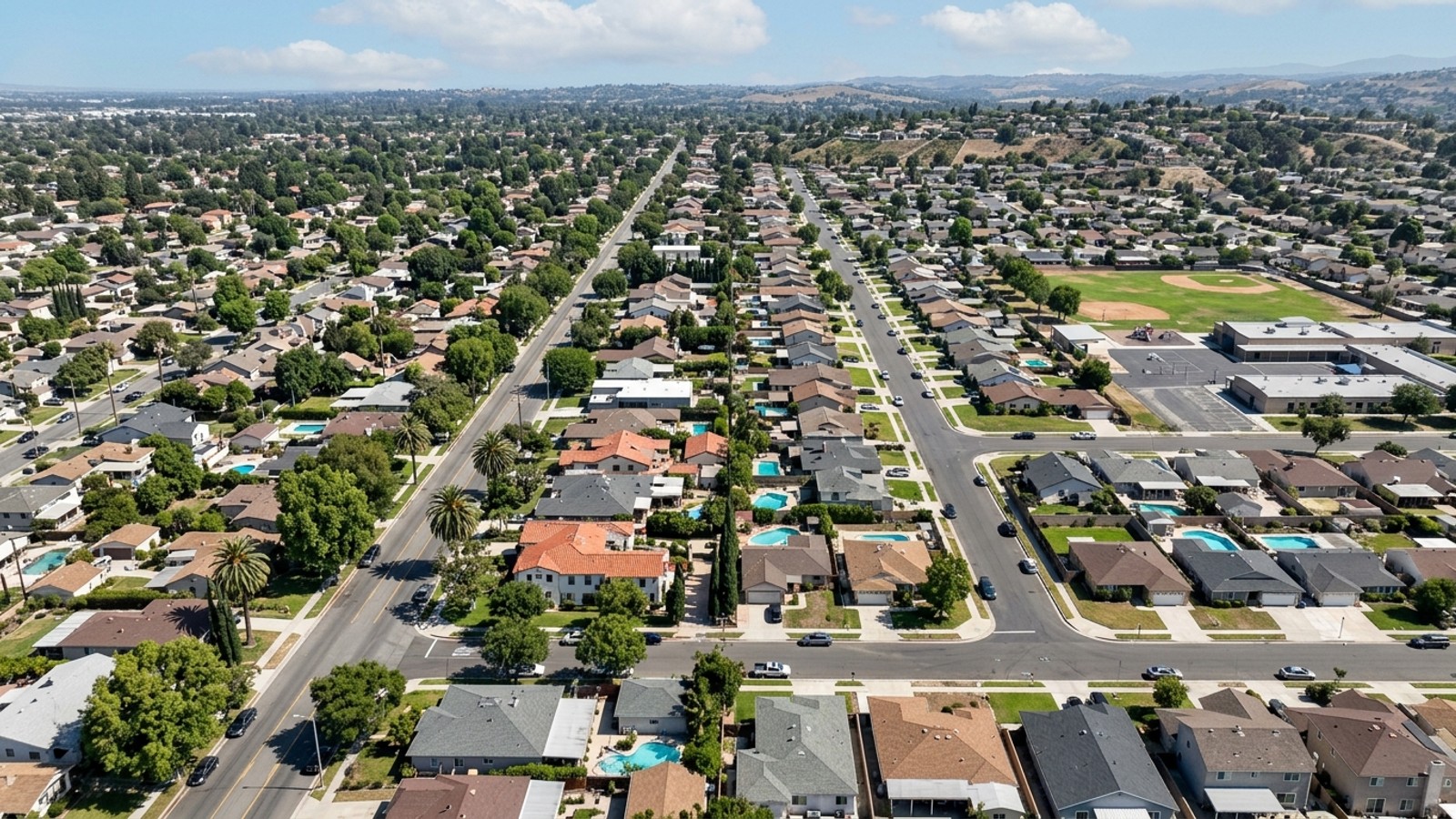
If you're buying in the Whittier, CA housing market, you're looking at a median home price of roughly $887,000, about 37 days on market, and somewhere around 83 available listings at any given time. Competition is real. Before you make an offer, you need to know what that home will actually cost you every month - and property taxes are a bigger piece of that number than most buyers expect.
California runs its tax system differently than most states, almost entirely because of Proposition 13. That law caps the base property tax rate and limits how fast assessed values can climb year over year. Once you understand how it applies inside Los Angeles County, the long-term math becomes a lot clearer.
Understanding the Property Tax Rate in Whittier, CA
California's Proposition 13 sets a 1% base property tax rate statewide. In Whittier, you pay that 1% plus whatever local voter-approved bonds and special assessments apply to your specific parcel. That last part matters - your effective rate depends on exactly where you buy.
Local bonds fund school districts, water infrastructure, and emergency services, so your final rate will run a bit higher than the state minimum. Two houses on the same block can have slightly different bills if they fall into different bond districts. The Los Angeles County Assessor determines the rate that applies to each individual parcel, so the only way to know your real number is to look it up.
How Your Bill Can Change Year to Year
Proposition 13 caps annual increases in a home's assessed value at 2% per year, as long as the property doesn't change hands. That's genuinely useful for long-term owners - it makes tax bills predictable.
When a property sells, the county reassesses it at the purchase price. That means you, as a new buyer, will almost certainly pay more in property taxes than the seller did - sometimes significantly more, if they've owned the place for decades.
How Los Angeles County Calculates Your Property Tax
The calculation itself is straightforward: your home's assessed value multiplied by the total local tax rate. When you buy, the purchase price becomes the new assessed value. The 2% annual cap kicks in from there.
On top of the percentage-based rate, special assessments get added as fixed dollar amounts - charges for trash collection, sewer maintenance, local landscaping districts, and the like. These don't scale with your home's value; they're flat fees.
Assessed Value vs. Market Value
Market value is what you paid. In Whittier, the median sale price runs around $887,000, and homes are generally selling at about 99% of list price.
Assessed value is what the county uses to calculate your taxes. In year one, they're essentially the same number. Over time, as market values rise faster than the 2% annual cap allows, the assessed value falls behind - which is actually a financial benefit for established homeowners, even if it's not something a new buyer will feel right away.
Estimating Taxes on a Typical Home
At the Whittier median of $887,000, the baseline county tax starts around $8,870 per year based on the 1% rule alone. Local bonds and fixed charges will push that total higher. Divide the annual figure by twelve and you have a rough monthly escrow estimate - your lender will calculate the precise number during underwriting.
Estimating Your Whittier Property Tax Bill
The simplest starting point: multiply the purchase price by 1.2% to 1.25%. That range generally covers the 1% base plus typical Los Angeles County bonds. If you're looking at a $900,000 home, setting a calculator to 1.2% gives you an estimated annual tax of $10,800 - a reasonable buffer for most Whittier neighborhoods.
Online mortgage calculators tend to default to a national average tax rate, which will throw your budget off in California. Adjust manually.
For a more precise figure, pull the current seller's tax bill. The specific fixed assessments and bond percentages tied to that property carry over after the sale; only the assessed value changes.
Searching by Address
The most accurate approach is to go straight to the source. The Los Angeles County Assessor's online portal lets you search by property address or Assessor's Identification Number (AIN). It shows the current tax rate area and lists every active bond on the parcel. Once you know those details, you can apply your new purchase price and see what you'll actually owe.
What to Know About Sales Tax in Whittier
Property taxes aren't the only local tax worth knowing. Whittier's combined sales tax rate adds the California state base, Los Angeles County district taxes, and any city-specific measures. That combined rate applies to most retail purchases within city limits.
For buyers budgeting a renovation or furnishing a new home, this impacts the overall cost of living in Whittier. Los Angeles County carries several district taxes supporting transportation and homelessness initiatives, on top of the state minimum. If you're buying large items that get delivered to your home in Whittier, expect them to be taxed at the Whittier rate regardless of where the store is located.
Looking Up and Paying Your Tax Bill
Los Angeles County mails property tax bills each fall. If your taxes run through an escrow account, your lender handles it. If not, you pay the Los Angeles County Treasurer and Tax Collector directly.
You can pay online by e-check (typically free), credit card, or debit card (usually carries a processing fee). Physical checks by mail or in-person payments at county offices are also options. The deadlines are firm - late payments mean penalties, no exceptions.
Tax records are public in California. Your current bill, payment history, and assessed value are all accessible through the Los Angeles County Property Tax Portal. You'll need your AIN, which is printed on your deed, your title report, and any prior tax correspondence.
Ways to Lower Your Property Tax Burden
The most common starting point is the Homeowners' Exemption, which reduces the assessed value of a primary residence by a fixed amount. You apply once through the Los Angeles County Assessor's office, and it stays in place until you sell or move out. The property has to be your principal residence as of January 1 of the tax year.
Base Year Transfers for Older Homeowners
Proposition 19 lets eligible homeowners aged 55 and older transfer their current property's assessed value to a replacement home anywhere in California - up to three times. It prevents a significant tax increase for long-time residents downsizing in Whittier or relocating without losing their Proposition 13 base. If the new home costs more than the original, the difference gets added to the transferred base value.
Appealing Your Assessment
If the market drops and your home is suddenly worth less than its assessed value, Proposition 8 lets you request a temporary reduction. You file an appeal with the Assessment Appeals Board during the designated filing period, and the county reviews recent comparable sales to evaluate your case. If it's granted, the reduction is temporary - once the market recovers, the county restores the Proposition 13 base value.
Taxes on New Construction and Special Districts
Buying new construction homes in Whittier or adding square footage to an existing property triggers a reassessment. The county values the new construction at current market rates and adds that to the land's existing base value. If you add a room or a pool, only the addition gets reassessed - the original structure keeps its Proposition 13 protection.
Newly built homes often come with supplemental tax bills as the county catches up on the transition from vacant land to finished structure. Plan for that in your first year.
Mello-Roos and Community Facilities Districts
Some newer developments in the Whittier area use Mello-Roos financing - Community Facilities Districts (CFDs) that fund streets, schools, and parks through a fixed annual fee. This charge sits entirely outside the 1% base rate and shows up as a separate line on your tax bill.
Ask directly whether a property sits in a Mello-Roos district before you get deep into negotiations. These assessments can run for 20 to 40 years, and lenders are required to include them when calculating your debt-to-income ratio.
Comparing Taxes Across Los Angeles County
The 1% base rate applies everywhere in the county. What varies is the stack of local bonds and parcel taxes on top of it. Cities with recent school bonds or major infrastructure upgrades carry higher effective rates. Newer tracts with Mello-Roos districts add even more to the annual bill. Older, established neighborhoods - fewer active bonds, no CFDs - tend to sit much closer to the 1% floor.
If you're open to expanding your search beyond Whittier, comparing total tax burdens across neighboring cities can meaningfully affect your purchasing power. Ask your title company for a property profile on any home you're seriously considering - it lists the exact tax rate for that parcel and makes a genuine apples-to-apples comparison possible.
Frequently Asked Questions About Whittier Property Taxes
What is the average property tax rate for homes in Whittier, CA?
The base rate is 1% of assessed value under Proposition 13. Local voter-approved bonds and fixed assessments push it higher. For most buyers, the total effective rate lands somewhere between 1.2% and 1.25%.
When are property tax payments due for Whittier homeowners?
Los Angeles County collects in two installments. Bills go out in the fall, and both installments carry strict deadlines - miss them and you owe penalties.
Are there Mello-Roos or special assessment taxes in Whittier neighborhoods?
Yes, some neighborhoods in and around Whittier have Mello-Roos or special assessments. These Community Facilities Districts fund local infrastructure and appear as fixed charges on the annual tax bill.
Will I receive a supplemental property tax bill after buying a house in Whittier?
Yes. The supplemental bill covers the difference between the previous owner's assessed value and your new purchase price for the remainder of the tax year. It's common and worth budgeting for.
How do I apply for the homeowner's property tax exemption for my Whittier home?
Apply through the Los Angeles County Assessor's office. You only need to file once, as long as the home stays your primary residence.
Can I transfer my current property tax base to a new home in Whittier under Prop 19?
Yes - if you're 55 or older and otherwise eligible, you can transfer your existing assessed value to a new primary residence in California. If the replacement home costs more than the original, the difference gets added to the transferred base value.
or another way